✍
THE QUOTE
“Democrats always like to brag that their guys are smarter than the opponents and Republicans always like to brag that their guys are more moral than the opponents. But if you’re looking for morals in politics you’re looking for bananas in the cheese department.” — Harry Shearer

♢
DEMOCRACY
I generally rake Republicans over the coals in these precincts.
You may ask why I don’t extend the same courtesy to the Democrats. They are, in many ways, nearly indistinguishable from the Republicans these days.
The last two Democratic presidents have been what used to be referred to as Rockefeller Republicans. Despite hysterical pronouncements by Fox News faces and talk radio squealers, neither Bill Clinton nor Barack Obama are wild-eyed radicals.
Sheesh, quite the contrary. Like the Rocky Reps of yore, Bill and Barry are staunch defenders of those that have it even as they pay lip service to those that don’t.
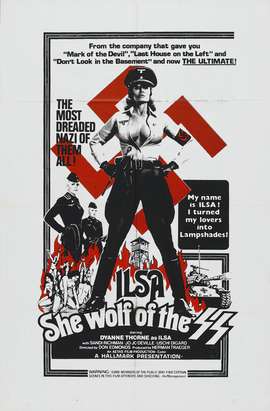
Oh sure, Clinton and Obama were and are light years ahead of the GOP on things like the environment, race relations, and Supreme Court nominees whose resumes do not include tutelage under “Ilsa: She Wolf of the SS.”
✍
Oh, and I’m not equating the likes of Antonin Scalia and Clarence Thomas with the Nazis. I find this whole people-I-disagree-with-are-Hitler trend of the last decade or so downright infantile. But the Ilsa reference is too delicious to pass up.
Anyway, the Dems who attain high office these days are not quite as crocodillian as their Republican counterparts. But they’re getting there.
If Barack Obama is such an airplane-hijacking, rock-throwing, Islamic terrorist mole, then why has he surrounded himself with so many Goldman Sachs unindicted co-conspirators?
I lay off the Dems because, gee, they’re so pitiful.
I was raised in a Democratic family in a Democratic city in a Democratic state in a Democratic nation. That’s right: when I was just learning who was who in this holy land back in the mid-1960s, my president was Lyndon Baines Johnson, my governor was Otto Kerner, and my mayor was Richard J. Daley. All Democrats.

Richard J. Daley & Teddy Kennedy
✍
Heck, the Democratic precinct captain in my childhood neighborhood, Barney Potenzo, a cigar-chomping, fedora-sporting party hack who visited our house at least once a month just to make sure our loyalty wasn’t wavering in the slightest, even convinced my mother to have the polling place in our basement a couple of times.
Those were exciting days. Some patronage stooges would dolly in the voting machines as well as boxes of supplies and canvasing sheets the day before the election. Then the next day the entire house would be awash in the aromas of coffee, hamburgers, and Barney’s cigar until late at night when the election judges and poll-watchers would be concluding their final negotiations to produce the obligatory local landslide for the Daley Machine.
On Election Day, I’d be sitting at the top of the basement stairs, listening and trying to see as much as I could. I was rapt by the process and the coffee-cum-cigar bouquet intoxicated me.
The first day we hosted the polling place, one of our neighbors, a little old Italian woman who’d finally been naturalized and was voting for the first time in her life tottered into the basement and told the judge she didn’t know what to do.
Barney Potenzo almost swallowed his cigar when he heard that. He dashed to the old woman’s side as fast as a shark who smells chum.
“Doan worry, Nonna*. I’ll take care a’ya,” he said as he put a vise-like grip on her elbow and whisked her toward a voting machine.
(*Nonna: affectionate Italian for Grandma, a familiar term of respect for a superannuated woman.)
In those days, the standard voting machine was an enormous green contraption that must have weighed a thousand pounds. The top half of the face of the machine contained a board with a list of the candidates for the various offices next to little levers that would make metallic plinks when they were flipped.

Plink
✍
To vote, one would enter the booth and pull a big handle that automatically drew a red curtain, affording the voter a measure of privacy.
You might expect that I’d hear thousands of plink, plink, plinks throughout the day but we lived in one of the most dependable Democratic wards in the city so most voters plinked once, for a straight-ticket vote, and then went on their way, assured that any reasonable favor they’d ask of Barney Potenzo would be granted until the next election.
Barney would listen intently as each voter entered the booth. If he heard a single, straight-ticket plink and then see the curtain open up, he’d grin at the voter. “T’anks a lot,” he’d say, his cigar bobbing with each syllable. “Gimme a call, y’need anyt’ing, okay now?”
Woe unto the voter, though, whose moment in the booth produced multiple plinks. That meant she or he was wasting precious votes on Republicans. When those few voters exited the booth, Barney would eye them grimly, his jaw clenched.
And if they had the temerity to say goodbye to Barney, the precinct captain might deign to throw a cold, “Yeah, okay,” at them.
So, on this particular day, Barney led the frail old lady to a vacant booth and said, “Now, here’s whatcha do.”
He proceeded to show her the big handle that would draw the red curtains and then he pointed at the little levers next to the candidates’ names.
“Look up d’ere,” he instructed. “Y’see d’at little lever next to Democrat? Yeah, d’at’s it. Y’pull d’at one and d’at’s all y’gotta do. Yer done, see?”
The little old lady hardly had a chance to say thank you when a young, conscientious cop (each polling place had a cop to stand guard) dashed up and put his hand on Barney’s shoulder.
“I’m sorry,” the cop said, “but you can’t do that.”
The cop clearly was new to the force and from a station outside our ward. He didn’t know who he was messing with.
“What the goddamn hell are you talkin’ about?” Barney roared. “Donchyou tell me what the hell to do!”
“Watch your language, sir,” the cop demanded.
“Hey, sonny boy, whaddya, some kind reformer or somethin’? Mind yer own goddamn business,” Barney said.
With that, the cop whipped out his bracelets and cuffed Barney right there in my family’s basement. It was thrilling.
“I’ll be a son of a bitch,” Barney hollered.
“You’re under arrest,” the cop said.
I couldn’t wait to see the news that night, certain this little drama would be the lead story. (To my great disappointment, Barney’s arrest wasn’t even mentioned; I hadn’t fully realized yet what a huge city I lived in and how many times this scenario was probably played out in a hundred polling places that day.)
The rest of the voters and poll-watchers and election judges froze. No one could speak. It was as if they were watching a natural disaster slowly unfold before their eyes, a tornado maybe, or an earthquake. My mother wrung her hands.
As the cop led Barney out of the basement, the precinct captain shouted over his shoulder toward the Democratic election judge, “Call Louie!”
Louie Garippo was the Democratic Committeeman of the 36th Ward. The committeeman was the real power in the ward. The alderman usually answered to him. The 50 ward committeemen met every year with the Big Potato himself, Mayor Daley, to choose a slate for the upcoming election. They seemed to have an innate sense of what the Mayor wanted and would act accordingly.
In return, the Mayor allowed them a pro-rated number of patronage jobs to disburse, based on their relative loyalty and their most recent voter turnout. In the 36th Ward, Louie Garippo was so powerful he could have snapped his fingers and ordered the firing of every cop in the Austin District police station and replaced them with elementary school patrol boys.
The Democratic election judge asked Ma if he could use the phone and then raced upstairs to call Louie. “Y’better get over here quick,” he said into the receiver.
Louie arrived in a matter of minutes. He listened as the judge told him what’d happened. “I’ll be goddamned,” Louie said. Then he asked Ma for the phone.
“Hiya, Commander, this is Mr. Garippo of the 36th. I want you to do something for me,” he said into the receiver.
Louie was only on the phone for a scant few moments. After he hung up, he passed me and tussled my hair. “Hey, you’re gettin’ to be a big boy now,” he said. “I bet you can’t wait until you’re old enough to vote.”
“No sir,” I said.
My mother smiled even though she was still wringing her hands.
And before I knew it, there was Barney Potenzo, sauntering back into our basement, looking for all the world like a cat with feathers sticking out of his mouth.
He’d been chauffeured back to our home in a squad car driven, of course, by a different cop than the one who’d arrested him.

Barney’s Limousine
✍
When he saw Louie, he gushed. “T’anks a lot, Mr. Garippo,” he said. “Some kinda punk kid, that police officer, huh?”
Louie Garippo only grunted. He hustled Barney to a corner of the basement and lit into him in a muffled voice. I couldn’t make out much of what he said beyond, “What’s the matter with you? Don’t you know any better than to….”
The new police officer on duty locked the door at six o’clock. The judges and poll watchers counted, negotiated, and drank coffee until two in the morning. Not that there was much to count other than an overwhelming number of straight Democratic votes. But Mayor Daley had a policy of holding back vote counts until after the Republican precincts in suburban DuPage County had reported.
Once he knew the Republican totals, then he could release a sufficiently higher number of votes from the city. The incumbent President Johnson destroyed Barry Goldwater in our precinct, as he did around the country that day. It was one of the greatest landslides in American history.
Who knows, maybe the Republicans learned something that day. The next presidential election year, 1968, saw Richard Nixon, utilizing the Southern Strategy, grab the White House.
The Republicans probably were tired of having elections stolen from them. The Dems, they knew, had ballot box-stuffing and jiggered vote counts down pat. The Republicans could never beat them at that game.
So, they pulled the scary black man out of their hat. Over the years, the GOP has utilized any number of scary bogeymen to counterbalance Democratic prestidigitation. There’ve been the commies, the fags, liberated women, atheists who won’t allow our kids to pray in school, brown terrorists, Manchurian Candidates, and socialists.

✍
It’s a hell of a lot more efficient strategy than depending on cigar-chomping party hacks to turn in manufactured vote counts. In fact, the Dems probably don’t even know how to steal a vote anymore.
But the Republicans never run out of bogeymen to scare the electorate with.
That’s why I go easy on the party of my childhood.
♢