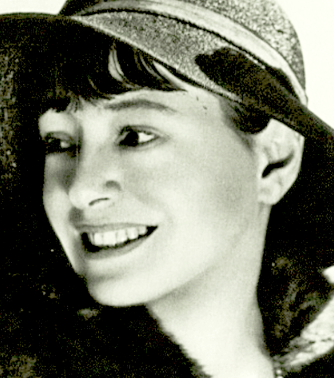
Dorothy Parker is one of my favorite figures in American history.

Parker
Born in 1893 in Long Branch, New Jersey, one of those beachside communities south of the New York metro area, she grew up to be a writer. And when I say writer, I really mean it. She wrote poetry, fiction, plays, screenplays, essays, and criticism. She was a member of the fabled Algonquin Round Table, where she was referred to as Mrs. Campbell. She’d been married, twice, to another writer named Alan Campbell (actually, they were her second and third marriages; she’d married a stockbroker just before he shipped out to fight in World War I when she was 23). She must have been gaga over this Campbell fellow to have married him twice. Like Elizabeth Taylor and Richard Burton.
In any case, Parker (or Mrs. Campbell, if you prefer) hung out with the likes of Robert Benchley, Robert E. Sherwood, Franklin P. Adams, Alexander Woolcott, Harold Ross, Edna Ferber, Heywood Broun, Ruth Gordon, and Harpo Marx — as brilliant, cutting, imaginative, and outspoken a group of Americans that have ever existed. Parker not only held her own among them, the lot of them had to scramble to keep up with her. One of my favorite books is The Portable Dorothy Parker, a compendium of her wildly varied works including her signature short story, “Big Blonde.”
The Algonquin Roundtable is one of the two historical places I’d wish to be reincarnated in (the other being the writers room of The Smothers Brothers Comedy Hour). I’d probably swoon over Parker, although she’d never be available to me considering she was herself in thrall to that Campbell guy. In fact, their relationship largely is reflected in the 1937 movie, A Star Is Born. Parker and Campbell co-wrote the script and, like the main characters in it, her fame dwarfed his.
To this day, Parker’s light and breezy but incisive as a scalpel poems ring true, as relevant as they were a hundred years ago. A couple of examples:
Her take on falling in love with creative types, “Bohemia.”
Authors and actors and artists and such Never know nothing, and never know much.
Sculptors andsingers and those of their kidney
Tell their affairs from Seattle to Sydney.
Playwrights and poets and such horses’ necks
Start off from anywhere, end up at sex.
Diarists, critics, and similar roe
Never say nothing, and never say no.
People Who Do Things exceed my endurance;
God, for a man that solicits insurance.
And, perhaps her most famous poem, “Résumé”:
Razors pain you;
Rivers are damp;
Acids stain you;
And drugs cause cramp.
Guns aren’t lawful; Nooses give;
Gas smells awful;
You might as well live.
Once, when told her editor was hollering for her to turn in a story she’d missed the deadline on because she was on one of her honeymoons, she replied to the messenger: “Tell him I was too fucking busy — or vice versa.”
She had a definitive attitude toward wealth. She wrote: “I hate almost all rich people, but I think I’d be darling at it.”
Which brings us to this observation of hers:
I think I knew what side I was on when I was about five years old, at which time nobody was safe from buffaloes. It was in a brownstone house in New York, and there was a blizzard, and my rich aunt — a horrible woman then and now — had come to visit. I remember going to the window and seeing the street with the men shoveling snow; their hands were purple on their shovels, and their feet were wrapped with burlap. And my aunt, looking over her shoulder, said, “Now isn’t this nice that there’s this blizzard. Now all these men have work.” And I knew then that it was not nice that men could work for their lives only in desperate weather, that there was no work for them in fair. That was when I became anti-fascit, at the silky tiones of my rich and comfortable aunt.
Parker, who by 1939 when she wrote this, had become a successful Hollywood screenwriter with Alan Campbell. She was as comfortable as a bankable script writer could be in those days. She wasn’t in Rockefeller or DuPont territory but she was never in danger of missing a meal. Nor did she have wait for a blizzard to earn a paycheck.
And then, along came the communist witch hunts. Anyone in Hollywood who didn’t genuflect before wealth was drummed out of business, including Parker. The FBI kept a 1000-page file on her. She was denied a travel visa during World War II (she wanted to work as a war correspondent) because she’d once belonged to the Joint Anti-Fascist Refugee Committee. And, worst of all, she’d been a loud advocate for civil rights. After the war, movie work became so scarce for her that she had to collect unemployment checks.
There are a few people, gone now, whose take on the reign of Li’l Duce and the creeping fascism overtaking this holy (unholy?) land I’d love to know. Mike Royko is one. George Carlin is another. Eleanor Roosevelt, of course. Frances Perkins and and Malcolm X, too.
And, of course, Dorothy Parker.