"The blog has made Glab into a hip town crier, commenting on everything from local politics and cultural happenings to national and international events, all rendered in a colorful, intelligent, working-class vernacular that owes some of its style to Glab’s Chicago-hometown heroes Studs Terkel and Mike Royko." — David Brent Johnson in Bloom Magazine
I generally do not traffic in social media memes. In fact, of late, I generally do not traffic in social media, period.
But I went on Facebook the other day to see pix of the damage caused by those tornadoes Friday evening and y’know what happens whenever you go on soc. med. — you get hooked.
Social media is the heroin of the 21st century. Smack, of course is out, as the Dandy Warhols sang almost 30 years ago: “I never thought you’d be a junkie because heroin is so passé.”
We Americans need something to be hooked on and data-mining scams masquerading as interactive communities are it now.
Anyway, before I hit rock bottom and admitted the monkey was on my back once again Friday, about two hours after I went on FB, I found the following manifesto. It may not even qualify as a meme. It’s just some guy’s post that’s gone viral. (And god in heaven, do I hate the term viral.) I reproduce it in its entirety because I couldn’t put it any better myself.
Read:
I don’t want to connect my coffee machine to the Wifi network. I don’t want to share the file with OneDrive. I don’t want to download an app to check my car’s fluid levels. I don’t want to scan a QR code to view the restaurant menu. I don’t want to let Google know my location before showing me the search results. I don’t want to include a Teams link on the calendar invite. I don’t want to pay 50 different monthly subscription fees for all my software. I don’t want to upgrade to TurboTax platinum plus audit protection. I don’t want to install the Webex plugin to join the meeting. I don’t want to share my car’s braking data with the actuaries at State Farm.I don’t want to text with your AI chatbot. I don’t want to download the Instagram app to look at your picture. I don’t want to type in my email address to view the content on your company’s website. I don’t want text messages with promo codes. I don’t want to leave your company a five-star Google review in exchange for the chance to win a $20 Starbucks gift card. I don’t want to join your exclusive community in the metaverse. I don’t want AI to help me write my comments on LinkedIn. I don’t even want to be on LinkedIn in the first place.
I just want to pay for a product one time (and only one time), know that it’s going to work flawlessly, press 0 to speak to an operator if I need help, and otherwise be left alone and treated with some small measure of human dignity, if that’s not too much to ask anymore.
I’ve ridden this rant several times before on this global communications colossus. It’s well-tilled soil, to be sure, but, dammit it, the phenomenon continues to baffle me.
This AM at Hopscotch, the coffeehouse that serves as my headquarters and back office, there stood about nine people, both waiting to put in their orders and cooling their heels for their drinks to be prepared. Each and every one of them was furiously thumbing on a smartphone.
And for the jillionth time I wondered, what in the hell are they doing? Whom are they communicating with? What urgent, desperately important task are they engaged in?
I honestly don’t know because, as loyal Pencillistas are well aware, I haven’t had a smartphone since 2017, when the screen of the first one I bought a couple of years earlier cracked and I was loathe to shell out the six or seven hundred bucks or even up to a grand for a new device. I went old school and got myself a nice flip phone, one that’s been in my pocket every day since.
It serves my needs well.
The smartphone has robbed us of those precious few moments of boredom, those instances when, with nothing else to do, we can look out the window and see where the sun’s shadows fall at this time of year, when we can look at the trees and just appreciate them, when we can glance at the lawn and know whether there’s been rain recently, when we can contemplate the infinite, when we can allow our thoughts to flow, unimpeded by demand or need, allowing us to know ourselves more intimately.
How about glancing around and seeing other people’s faces? Taking note of what they’re wearing? Innocently eavesdropping on their conversations? These are all learning, bonding exercises. And, sadly, they’re things we don’t do anymore because we’re busy thumbing messages to…, well, somebody, somewhere.
A friend recently remarked that texting is weird because it’s such an old-fashioned thing. Way back in the 1790s, when the Chappe telegraph was invented in France, it was seen as the height of modern technology, the transmission of codes and letters across distances far beyond our range of hearing. Then, with the spread of electric telegraphy by the middle of the 1800s, just about the whole world could be connected by wire so that those slow, clunky codes and letters could be transmitted, one at a time, across hemispheres. Samuel Morse’s tweak of the technology was so earthshaking, so advanced it could be viewed as the equivalent of some inventor or engineer today coming up with a handheld consumer device that can spot and eliminate any and all cancers in a person’s body at the press of a button.
The electric telegraph was so out there, in the sense of it being a harbinger of the future, that it would go on to profoundly affect the dissemination of information, the increase of knowledge, the growth of commerce, the exchange of culture, and even the execution of war.
Morse, texting.
But that was nearly 200 years ago. See how Wikipedia describes electrical telegraphy: “a point-to-point text messaging system.”
That precisely describes the system those nine people in line at Hopscotch were engrossed in.
That’s another thing that puzzles me about our 2024 mania for texting: it has replaced the telephone as our primary means of communication. Just imagine this with me for a minute: suppose, when people were becoming aware of the telegraph back in the 1840s, someone said to them, “In the future, you’ll be able to speak with each other using a technology that’ll carry your voice around the world if need be. The person you’re speaking with will hear your voice as you speak and be able to respond as if the two of you were in the same room at the same time.”
Those people of the 19840s would surely have gasped, “Holy shit! That’d be amazing. That’d make our electric telegraph look like a kid’s toy.”
That, we know now, would have been the telephone.
Yet today, speaking on the telephone is considered as old school as chopping wood to heat the home.
Somehow, though, that nearly two century-old system of communication, less immediate, less advanced, is new again, advertised by smartphone carriers as if it were as ultramodern as tourist travel to other solar systems. This just doesn’t make sense to me.
Anyway, I know I’ll be buying a smartphone soon. The world demands it. For pity’s sake, I won’t even be able to use a parking meter without one. And, I hear, soon it’ll be the only way I can get on an airplane.
When I do get a smartphone again, I’ll make sure not to be wasting my life texting nonsense to somebody, somewhere, as if the well-being of human life depends on my message. It won’t. It doesn’t.
Loyal Pencillistas are well aware that I am the last human being on this planet who does not own a smartphone. I am the proud possessor of a flip phone. Not terribly long ago, I went into the Verizon store to report my phone wasn’t taking a charge well anymore. When I whipped out my flip phone the clerk recoiled, ever so slightly, as if I’d pulled a tarantula out of my pocket.
Certain tribespeople from the deep Amazon rainforest, members of isolated societies that have had scarce contact with the modern world, would snicker upon being told I own and use this thing:
I’ve already run the laundry list of reasons I don’t want to get re-reeled into the smartphone opium den but, for those not in the know, here they are again:
I have no desire to be tethered to the internet 24 hours a day
I am neither a neurosurgeon, US Air Force nuclear wing commander, nor 911 emergency call answerer so there’s no need for me to be in constant communication with anyone
I do not need or want a news feed that reminds me incessantly what an insufferable pack of idiots we humans are
I struggle with certain addictions already and do not need another
There. That oughtta be enough of an argument for anyone who thinks my eschewing of the device is idiosyncratic. Well, it is idiosyncratic, but in a healthy, rebellious way, not in a Jeez, is that guy psychotic or what? way.
People might say that if I had kids I’d long ago have jumped on the device bandwagon but I’d like to think I’d be even more anti-smartphone. Trust me, all these generations of kids with smartphones who are shackled to their parents’ smartphones are in line for years of expensive shrink sessions trying to understand why they can’t individuate yet at the age of 42. Either that or they’ll have long been dead because they’d been smushed by a car when crossing the street while staring obliviously into their screens for the latest Harry Styles news.
Styles
And see? I don’t have a smartphone and I know who Harry Styles is. I know, bizarre, right?
Now let me explain that “re-reeled” reference five grafs above. I owned a smartphone for a short period of time five or six years ago. That fact that I felt a constant impulse to go to it during conversations, while driving, while evacuating my bowels, when waking up in the middle of the night, while eating — you know better than I do, you smartphones users — scared the crap out of me. I felt as though I was losing touch with time and place. There was, in fact, no more here and now for me; everything was there and then.
Not only that, I cracked the screen within the first year of owning the thing. Replacement phones ranged from a few hundred dollars for a cheap knock-off to well over a grand for the real thing. Like I said, I’m no obedient consumer. I’d rather spend that kind of dough on pizza and a certain botanical.
In any case, I got to thinking about this mania we have for technology and devices when our new range was installed. The manual for it runs to nearly a hundred pages. I wanted to boil a kettle of water for my morning coffee and had to stop because — swear to god — you need to program the stovetop. Not only that, the thing has remote capability.
I thought, For pity’s sake, people are too lazy to haul their huge butts off the sofa to turn the burner on or off?! And, believe me, my butt is as wide as it can get and I can barely walk thanks to hip arthritis and several other obstacle-ish maladies but I get up off my titanic derriere to turn the burner on or off.
See? Technology. Just because something’s possible doesn’t mean it’s needed. It’s like self-driving cars. I read all these articles about how it’s possible and it’s coming and I say, Why?
Take self-service check-out at the grocery store. I never recall anyone saying, My god, I can’t bear standing there while the clerk scans my tomatoes! If only I could do it myself. Nevertheless, Kroger and Publix and Meijer and Target and all the rest sank gobs of dough into the technology — not because they were wringing their hands over our convenience and comfort, but because they wanted to reduce labor costs. For that, read: cut jobs.
There are always unintended consequences from emerging technologies. Do you think Lenoir and Otto mused, when they were inventing their internal combustion engines, Hmm. I wonder if this machine may one day alter the planet’s climate to the extent that it threatens the existence of millions of species?
The parking meters in my fair adopted town of Bloomington, Indiana more and more are becoming programmable, meaning they won’t take coins or bills or credit cards but will only work with smartphones. The world is turning into a device-industrial complex. Even if an idiosyncratic nudge like me wants to thumb my nose at smartphone technology, I’ll still have to join up if I want to park my car somewhere.
To this date, if you have any mental capacity whatsoever, you keep a small pile of coins in your car so you can feed the meter. That’s not too onerous a practice. Again, it’s not as if the multitudes have been shaking their fists and shrieking for remote technologies to free them from the ordeal of carrying currency.
And here’s the kicker: the company that runs Bloomington’s smartphone-activated meters says you can use the meters even if you don’t have a smartphone. Simply use its “automated phone system.” Only you’ll have to determine the correct local phone number by consulting its website, pre-register online, and complete the process by using the company’s app. In other words, you need a goddamned smartphone!
Somebody’s benefitting from all this and it ain’t necessarily me.
John D. Rockefeller: Famed for Giving Dimes to Street Kids.
When I was a kid, whenever I wanted my mother to buy me anything that wasn’t a bare essential, she’d snort and call me either Rockefeller or King Farouk. John D. Rockefeller, of course, was the world’s richest man once, and Farouk was the flamboyantly wealthy Egyptian king in the mid-20th Century.
Ma had a problem with perspective. She couldn’t just say, “Sorry, Mike, I really can’t afford that Tonka dump truck just now. Maybe someday.” I could have understood that. What I couldn’t grasp was being compared to two of the wealthiest and most profligate spenders on Earth just because I wanted a toy.
Ma was, after all, a product of the Great Depression and World War II, and we spawn of that so-called Greatest Generation have heard all the stories they loved to tell about how hard they had it and how heroic they were in overcoming it all.
They were, more accurately, the Greatest Self-Congratulating Generation.
Anyway, were Ma still around to count her pennies, she’d drop dead upon learning that a telephone can now cost a thousand dollars and more.
I resisted getting a smartphone for the first few years of the technology’s existence. Then, around 2014 I figured I’d join the crowd since my insistence on holding on to my flip-phone was becoming, to friends and acquaintances, a potentially worrisome quirk.
It’s not that I’m averse to new technology. Hell, I was among the very first people to have a cell phone. I got one in 1997 when you weren’t even allowed to put down a cell number on an application. And, before that, I purchased one of the very first laptops four decades ago when they still weighed about as much as a small refrigerator.
But my philosophy long has been this: If I haven’t said to myself prior to the introduction of some new device, “Golly, if only someone would invent a… fill-in-the-blank,” then I don’t need the thing.
An Early Laptop.
I’m no Luddite, mind you. I recall walking down Michigan Avenue one day about 40 years ago, thinking, “Y’know, it’d be great if I could have a little portable phone that’d fit into my pocket. I wouldn’t have to miss any calls.” Around the same time, I dreamed of a portable super-typewriter I could carry in my backpack and would let me write wherever and whenever I wanted and that could hold all my rantings and whatever articles I was working on. A laptop, in other words.
And, yeah, I eventually did come around to buying a smartphone. That was about ten years ago. I had the thing for a few years and found it unwieldy, too easily marred or broken, and — most of all — way, way, way, way too addictive. So, in 2017, I walked into the Verizon store and asked for a flip phone. The clerk looked at me as if I’d asked to see his selection of hourglasses. He had to ask his manager if they still carried the things. The manager came out and asked me if I was sure. I assured him I was and he nodded, skeptically.
See, I’d never said to myself, Golly gee, if only I could be tethered to the internet every second of the day. If only I could remain in constant contact with every friend I’ve ever made and millions of others with whom I’m as yet unacquainted. If only it had all the music I’ve ever accumulated, every picture I’ve ever taken, every detail of my life, all electronically stored in an electronic cloud. If only I could have at my immediate beck and call the exact height of the Burj Khalifa, the population of the state of Nevada, the precise date and time Prince died, all on a device I can use while hurtling down the expressway at 72 miles per hour, eating dinner, or having sex.
I’ve never envisioned the day when such a device and its software would addict me as effectively as alcohol, heroin, or nicotine. Yep, researchers have determined that our dependence on smartphones is, indeed, an addiction. And the apps that pretty much every business in existence insist we download are crafted to reach us at a cellular, hormonal level. One study in the journal, Addictive Behaviors, indicates that smartphone usage produces brain restructuring disturbingly similar to that resulting from recreational hard drug use.
Smartphones have turned us away from trusting our own eyes and ears. A gorgeous sunset, the Grand Canyon, a NASA rocket launch, hell, even the cute-ness of our dogs, cats and kids can’t be enjoyed in the moment. They have to be stored on our smartphones. I saw the motorcade of former president Jimmy Carter pull up on Wabash Avenue one afternoon a few decades ago. Everybody stopped in their tracks, watched him get out, and walk into a bookstore. They applauded him respectfully and then went about their business. Now, of course, everybody’d be too busy trying to catch the moment on their smartphones rather than seeing it.
The thing is, I remember that moment with clarity. In my mind it’s as though Carter stepped out of that limousine just this morning. Were I too busy clicking a photo of it, perhaps my memory of it would be lost. Either that or never imprinted in the first place.
“Stop living an almost life,” Bill Maher said in a bit last August.
Trust Me, I Know What Bacon & Eggs Look Like.
People walk into a party and they immediately text their friends saying “Where are you? What are you doing?” They watch a guy hit a home run at the ballpark and instead of cheering, they’re clicking. They sit down to eat breakfast at a restaurant and they send the picture of it around the globe, as if the rest of us have never seen bacon and eggs before.
The here and the now are no more.
Smartphones are expensive and they’re vital drivers of our economy. Consumer capitalism being what it is, corporations have found new and creative ways for us to get hooked on their stuff. And Ma, were she still with us, would at last rightly be able to say, “Who do you think you are, King Farouk?”
Farouk of Egypt: He’d Have a Thousand Smartphones.
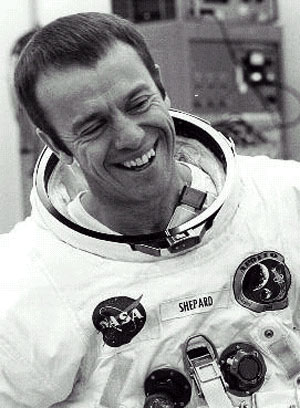
“I’d like to say I was smart enough to finish six grades in five years, but I think perhaps the teacher was just glad to get rid of me.” — Alan Shepard
♢
TEACHERS ARE PEOPLE
Let’s talk teachers today.
A report on WFIU local news this morning mentioned the Richland-Bean Blossom School Corporation program to replace text books with iPads. The RBBSC is buying a thousand of the devices for use by students over the next three years.
Now, this seems to be a fairly good idea. It’s good for the environment. It’s good for the kids’ backs. It’s good because kids are growing up in a world wherein books are goofy things that old people waste their time with while iPads are what every cool person has.
This Used To Be Yellowwood State Forest
✍
So far, so good.
The report, though, mentioned that teachers now will be just a click away. Should a kid need to know, for instance, how many pages the essay on the Civil War that’s due tomorrow morning has to be, all she has to do is email the teacher and she’ll have her answer within moments.
Sounds good, no?
No.
It stinks for the teachers.
No matter how dedicated a teacher is, no matter how much she loves her job and her students (although god knows why), she needs some time away from them all.
Mother Teresa Would Belt These Kids
✍
And, trust me, the minute kids realize the teacher is a touch of the send button away, they’ll be harassing the poor soul from morning until night.
See, this thing reeks of the current workplace zeitgeist that holds that as an employee of the corporation, you are now owned lock, stock and barrel by it. Every desk jockey in this holy land is now tethered to American Widgets, Inc. 24 hours a day via SmartPhone and Droid and all the rest.
You Are Ours
✍
Anyone who isn’t at the constant beck and call of management and coworkers is not getting ahead. Not only that, those recalcitrant fools risk being axed forthwith.
When pagers became widespread in the 70s and cell phones started coming on the scene in the 90s, advertisements for them often featured the likes of heart surgeons extolling the virtues of whatever device was being peddled. The idea was, If it weren’t for this cell phone, my patient would have died horribly and with great suffering.
Now the pager and cell phone peddlers knew they couldn’t survive solely by marketing their toys to heart surgeons but they were banking on the rest of us watching their commercials and thinking, Man, I want to be super-cool and indispensable just like that doctor.
Next thing you knew, office supply salespeople and fast food restaurant managers were wearing pagers and, later, cell phones in clip cases on their belts.
This Person Never Wants To Have Sex Again
✍
The sane among us considered them geeks but as the years slipped by, more and more of us became geeks. And by extension, fewer of us remained sane.
Now, of course, anybody who doesn’t have a cell phone with texting and Internet capabilities is, for all intents and purposes, a nut.
Call me a nut.
I subscribe to the Louis CK philosophy of gadgets: Just because a technology has been invented doesn’t mean you have to use it.
✍
But the sacred corporation has embraced these technologies with all the fervor of born agains. There’s no better way to keep tabs on your wage slaves. You like your $65,000 a year gig? You’ll give yourself over to us like a high school dropout in love for the first time.
Nobody asked me, but if the Richland-Bean Blossom School Corporation wanted my vote, I’d say leave the poor teachers alone for a few hours a day, wouldja?
♢
LET’S GO OUT
Click.
♢
TEACHERSARE HUMAN
Now let’s look at the other side of the teachers’ coin.
This pic has been circulating in the Facebook universe lately:
✍
In case you’re having a hard time reading the note, it begins: “I am a teacher. You are able to read, write, do arithmetic and much more because of people like me.”
It’s part of that whole I-Am-the-99% thing wherein the downtrodden of this holy land speak plainly and plaintively about how greed capitalism is crushing them. And generally I agree with every word they write.
But this one bugged me.
Yes, I’m all for teachers. And yes, the right wing, god-fearing, anti-intellectual gang that runs things these days would like nothing better than to break teachers unions, slash funding for schools to the bone, and mandate that the story of Noah be taught in science class.
Alright Children, Time For Your Biology Lesson
✍
I buy the argument that a society that doesn’t value education — as ours largely does not — is marching toward its well-deserved grave.
Still, the hubris in the above screed rankles.
We humans take to reading and writing innately. The argument has been made, most notably by renowned linguist Steven Pinker, that the capability to produce and reproduce language is hard-wired in us, much like the ability to spin a web is written into the genetic code of the spider.
I’ll give you a bit of anecdotal evidence. I was sick throughout most of my kindergarten year. I had some weird low-grade fever deal that kept me home from school most days.
Anyway, I taught myself to read as I sat home. I flipped through the World Book Encyclopedia constantly, especially the parts that had to do with World War II, airplanes, trains, and maps. I’d see the little squiggles beneath the photos and ask my mother what they meant. She’d be grating breadcrumbs or making spaghetti sauce and she’d reply, “That says ‘tank’,” or “Illinois.”
Aw, Cool!
✍
And I’d repeat the word or words. Mainly, though, I gleaned words and sentences through repetition, seeing them again and again in different places. I started to understand what “the” meant, or “men,” or, for that matter, “World Book Encyclopedia.”
This is how humans learn.
Teachers have their place as guides through the thicket of rational thought. Ideally, they help us learn to think critically. They steer us toward effective ways to study. At best, they inspire us to keep those childlike senses of wonder and curiosity we’re all born with.
But teachers are human. Some are good at what they do. Some are not. Too many of my teachers were far more interested in teaching my classmates and me the lessons of conformity and obedience.
The only things I learned from them was how to reject those lessons.
I see no reason to believe teachers have changed all that much since I was a school brat.